Precognitive Warnings
The RookPrecognitive warnings are not visions received by the former Myfanwy Thomas herself but reports that reach her from strangers who claim to have glimpsed her future. Their fragments tell her that she will lose her memory, be attacked by men in latex gloves, and survive a fight whose victor she expects to be her future, amnesiac self. Because she cannot explain or prevent the foretold rupture, she writes letters and prepares for the person who will inherit her body and a life under threat.
How the warnings arrive
Over the year before the predicted attack, several strangers approach Myfanwy Thomas claiming to have seen her future. Some know that they sometimes experience precognitive flashes; others cannot explain why they have come to speak to her. Their accounts take the form of dreams, visions, or hunches. At first she dismisses them as the words of random strangers, but their repeated appearances make that response increasingly difficult to sustain.
The warnings do not make Myfanwy a seer. She explicitly distinguishes her situation from psychic prediction: she cannot see what is coming or extract useful answers from the future. What she possesses instead is a collection of other people’s partial reports. Their variety and unexplained arrival leave her with grounds for alarm, not certainty about the cause or full course of events.
The predicted attack and loss
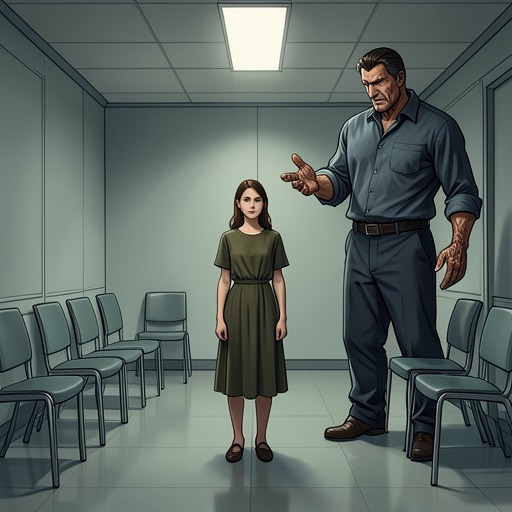
The clearest forecast is a scene of disorientation: Myfanwy knows that she, or the person who will occupy her body after her memory is gone, will come to in the rain without knowing who she is. The amnesiac woman will be surrounded by dead people wearing gloves. One particularly eccentric woman in Liverpool describes those bodies as having been taken down hardcore, a vivid phrase that Myfanwy records without claiming to understand how the attack will unfold.
Her numbered account separates the forecast into linked reversals. She expects to lose her memory, though she has no idea why. She also expects an attack, a fight, and a victory, placing the final outcome more confidently with her successor than with herself: Myfanwy says she is good at organizing but does not fight. The black eyes she anticipates may be hers, since that sort of injury seems to happen to her. The warning therefore preserves both an expectation of danger and a distinction between the former self’s habits and the successor’s likely actions.
The latex gloves make the forecast more than a prediction of physical violence. Myfanwy treats them as an important clue, not an incidental detail, and infers that someone she ought to trust has decided she must be removed. She does not know the identity or motive of the person behind it; she even allows that the decision may concern something she has not yet done. Precognition supplies the shape of a betrayal while withholding the explanation that would make it possible to resolve in advance.
Letters as preparation
The warnings prompt Myfanwy to write to the person who will awaken after the memory loss. She does not assume that this future self is simply an unchanged continuation of her; she wonders whether the amnesiac is made of parts of her or is entirely new. The question turns the prediction into a problem of identity as well as survival: the future recipient may inherit a body and circumstances without inheriting the memories that make Myfanwy’s life feel familiar.
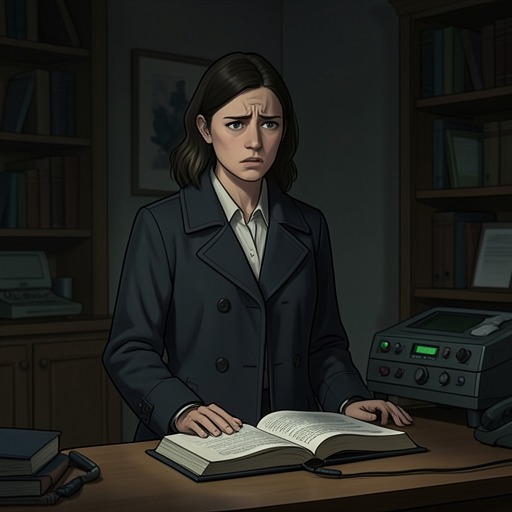
She cannot be sure the recipient will find or read any particular letter, so she places copies in every coat and jacket she owns. The precaution connects the forecast of an attack in the rain to the practical possibility that the future woman will be wearing one of those garments when it happens. Myfanwy does not claim that the letters will make the danger disappear. She hopes only that what she has learned will help the successor, who may also acquire insights of her own.
The letters give the prediction a conditional, rather than commanding, purpose. Myfanwy presents the successor with a choice: walk away from her former life and build another one, or take up the life and obligations left behind. If she leaves, she will need to leave the country; Myfanwy has arranged money, instructions for constructing a new identity, and lists of names and facts intended to help protect her. The future remains dangerous even in this alternative, but the foreknowledge has let Myfanwy prepare a possible route out without choosing on her successor’s behalf.
Prediction, conflict, and secrecy
The novel’s larger history gives the warnings a broader context of information arriving too late or in incomplete form. In 1677, creatures created by the Grafters emerge from the ocean onto the Isle of Wight, beginning a supernatural war on British soil. The Checquy responds with Pawns under Rook command; three weeks of fighting kill hundreds of civilians and cost dozens of Checquy soldiers for each Grafter creation brought down. The conflict ends only when the surviving Rook, John Perry, links his mind to the Grafter general’s and shoots himself, killing both. The battle’s outcome does not erase its cost; it leads to negotiations shaped by the Checquy’s decimated forces and dead commanders.
The resulting treaty requires the Belgian ruler to dissolve the Grafters, withdraw funds, end experiments, and confiscate their estates and possessions. Under Checquy supervision, the project is dismantled, its leaders and scientists killed, altered beings put to death, and facilities burned. The organization consequently has no reason to suspect that the Grafters remain a threat. That confidence becomes one of the novel’s historical examples of how a force believed finished can persist beyond the knowledge of those who defeated it.
Much later, Graaf Ernst von Suchtlen rejects the idea that the Grafters’ purpose is simply renewed invasion. He describes the earlier invasion as a disastrous effort instigated largely by the rulers of his country and says the later strategy was a feint: the visible threat concealed another pressure against the Checquy. He argues that conquest cannot remain secret in a smaller, more connected world, while the Checquy and the Grafters alike depend on keeping their existence from becoming public knowledge. The old war and its aftermath thus echo the form of Myfanwy’s personal warning: visible danger points toward a concealed intention, and information about that intention is incomplete until the threatened party can interpret it.
From warning to possible alliance
The history of retaliation does not dictate its ending. Graaf Ernst recounts that the Checquy destroyed his homes and friends, burned his corpse, and cast his ashes into the ocean; he survived through a sleight of body. His first response was concealment and the desire to inflict pain. Over a succession of lifetimes, however, he came to regard his spite as petty and the Checquy as a flawed but potentially legitimate governing body. He says that he continued to infiltrate it and establish collaborators not to harm it but to persuade it that joining their organizations served its interests.
This account sets Myfanwy’s warning of betrayal beside a conflict in which infiltration has more than one possible meaning. The Checquy has good reason to fear hidden enemies, yet Graaf Ernst presents covert preparation as leverage for an alliance rather than simply as a prelude to attack. Myfanwy, for her part, insists that an open war would be hard to conceal and contrary to the Checquy’s mandate to protect in secrecy; she concludes that he has come to negotiate a union, not merely demand surrender. The warnings therefore establish neither that every hidden intention is hostile nor that trust can be assumed. They make vigilance necessary while leaving room for new knowledge to change what the danger means.